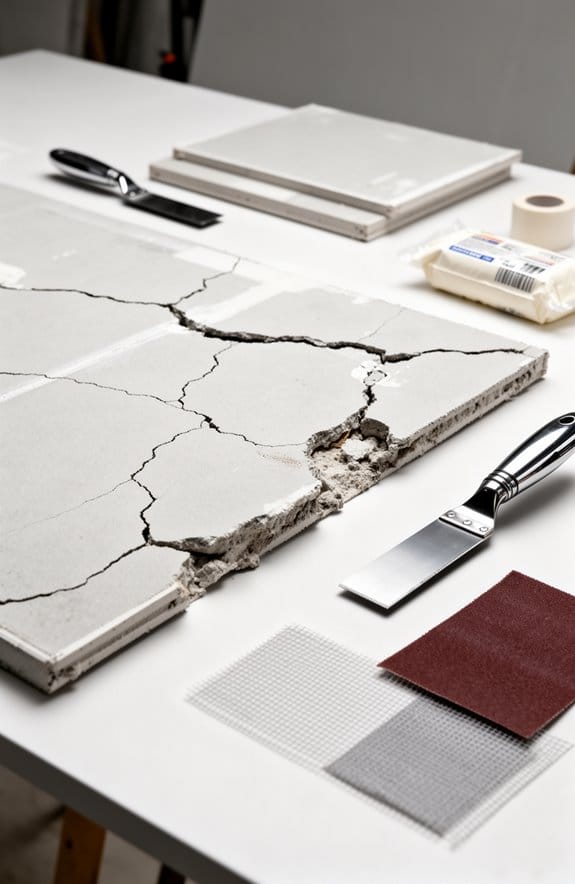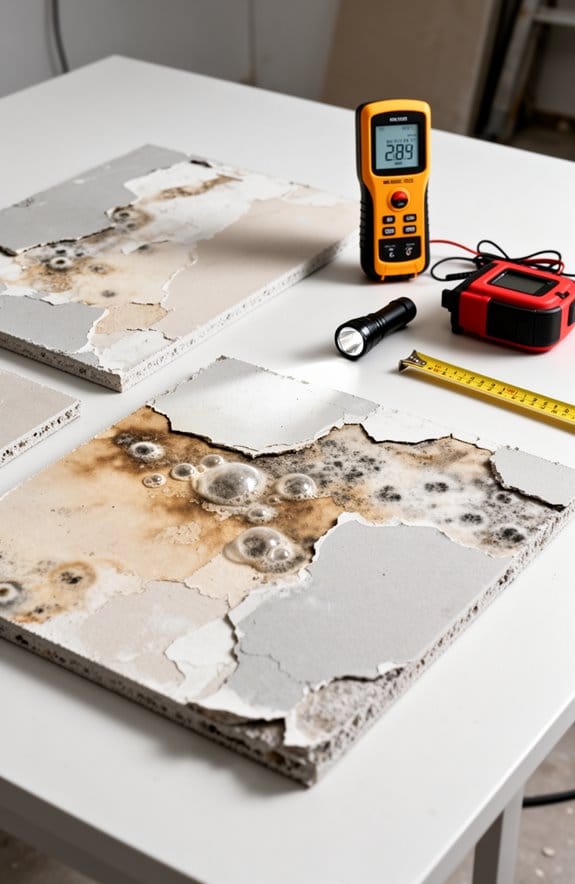

How can you spot water damage in drywall before it turns into a bigger headache? It’s not always obvious, but you can look for a few key signs that might indicate trouble ahead.
First off, keep an eye out for yellow or brown spots on your walls. These discolorations often signal that water has seeped in. And don’t ignore soft, sagging areas – they can mean your drywall is compromised. You might even notice a musty smell hanging around, or perhaps some visible mold cropping up around fixtures.
Here’s the trick: grab a flashlight during your inspections. Shine it on walls to find any bulging or cracking that might not be visible in regular light. It might seem tedious, but checking these areas could save you from more costly repairs.
Also, think about using moisture sensors in places like bathrooms and kitchens where water damage is more likely to happen.
So, why does this matter? Well, the sooner you catch these signs, the better. If you notice a couple of these issues together, it might be time to call in a professional.
Truth is, staying alert to the signs of water damage can make a huge difference in protecting your home.
So, keep an eye out and don’t hesitate to act if you need to! Have you checked your walls lately?
Key Takeaways
- Look for discoloration on walls and ceilings, indicating potential moisture issues that require attention.
- Check for soft or sagging areas in drywall, which suggest excessive moisture and possible damage.
- Notice any musty odors, as they often signify hidden mold due to water problems.
- Inspect for peeling paint or bubbling wallpaper, as these can point to moisture buildup behind surfaces.
- Regularly conduct inspections to identify early signs of water damage before they escalate into larger issues.
Common Causes of Water Damage
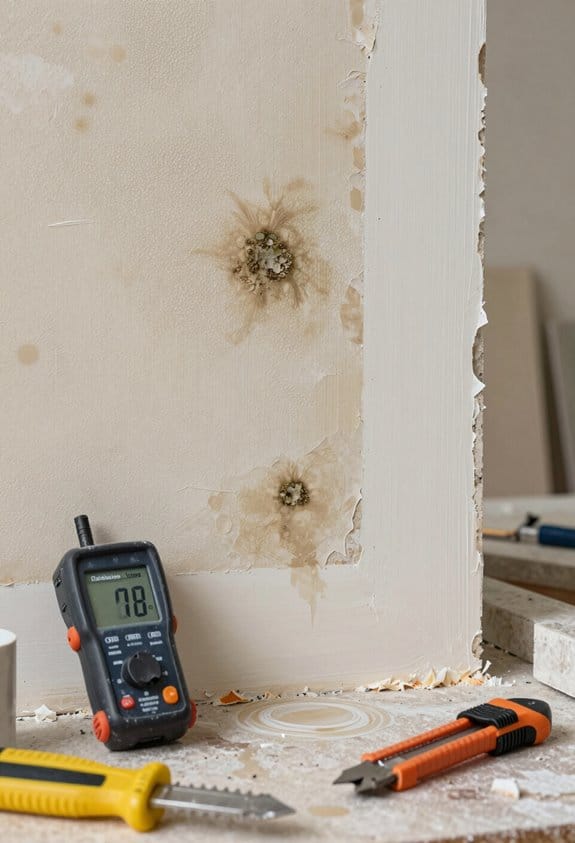
Have you ever noticed water spots on your walls or ceiling and wondered what’s going on? Water damage in drywall can sneak up on you, but if you know what to look for, you can catch it early and avoid costly repairs.
Leaks from burst or aging pipes are a common culprit, often releasing a lot of water in a short time. Think about it: a pipe breaks in your wall, and before you know it, you’re dealing with a soggy mess. Weather can bring its own set of issues too. Severe storms can lead to roof leaks, letting water seep into your walls. You might not realize the extent of the damage until it’s too late.
Humidity plays a role, especially during the summer months. When it’s steamy outside, that moisture can hang around inside, sneaking into your drywall and potentially leading to mold growth. And then there are structural issues like foundation cracks. These cracks can allow groundwater to trickle into your basement, creating long-term problems that are both frustrating and expensive to fix.
Improper HVAC maintenance can also be a hidden villain. If your heating or cooling system isn’t well taken care of, condensation can form and drench your walls without giving you any clear signs. Seriously, that’s just the sort of sneaky issue that can escape your notice until it’s a full-blown disaster.
As you think about your home, it’s worth being proactive about these risks. Regularly check for signs of leaks, stay on top of your HVAC maintenance, and don’t ignore any odd smells or spots on the walls. Using a waterproof repair sealant promptly can also help prevent minor damage from escalating into serious issues.
Spot Early Signs of Water Damage
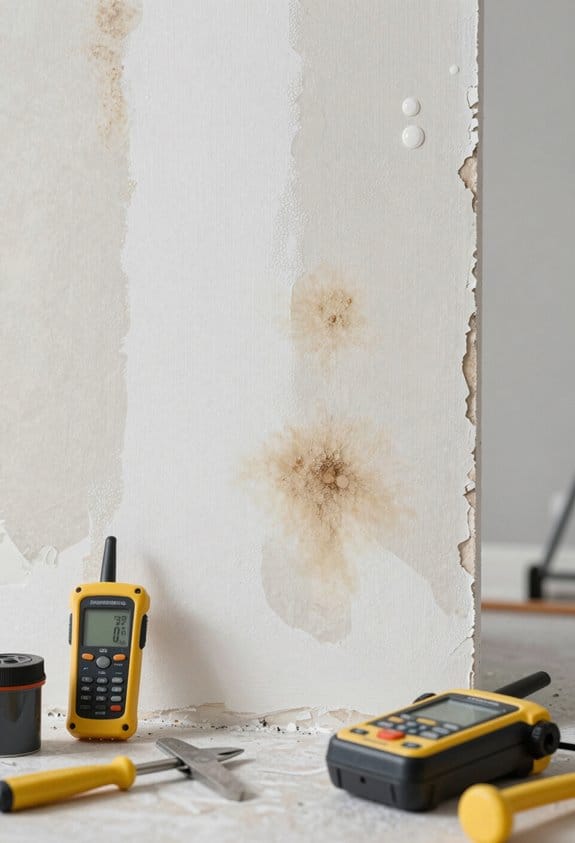
Have you ever noticed strange spots on your walls and wondered what they might mean? Spotting early signs of water damage in your home can save you a ton of hassle down the road.
Start by keeping an eye out for discoloration on the drywall. Yellow, brown, or gray spots can be telltale signs of water making its way in. It’s easy to overlook these at first, but they often indicate a bigger issue brewing behind the scenes.
Next up, check for any soft or sagging areas. If a section feels spongy when you press on it, that’s a red flag for excessive moisture. And while you’re at it, don’t ignore those musty odors that might fill the air. They could mean that hidden mold is trying to make itself at home.
Also, take a good look at your paint and wallpaper. Peeling paint or curled wallpaper—especially at seams and corners—isn’t just a sign of wear and tear; it often points toward moisture buildup that shouldn’t be ignored.
Lastly, watch for visible mold around baseboards and plumbing fixtures; seeing it pop up usually means there’s unresolved moisture just waiting to cause more damage. Using adjustable cutting depth rotary tools can help remove damaged drywall precisely without affecting the surrounding material.
Recommended Products

Measures moisture in wood and wood floors, drywall, concrete and concrete block, stucco, plaster, masonry and other building materials

HUMIDITY TEST ACCESSORIES: The Accessory Pack for performing the in-situ relative humidity test in concrete as per ASTM F2170; for use with our CMEX5 Concrete Moisture Encounter, MEX5 Wood & Drywall Moisture Encounter, & DL-RHTX Feedback Datalogger

Measures moisture in wood and wood floors, drywall, concrete and concrete block, stucco, plaster, masonry and other building materials
Recognize Visual Indicators of Damage
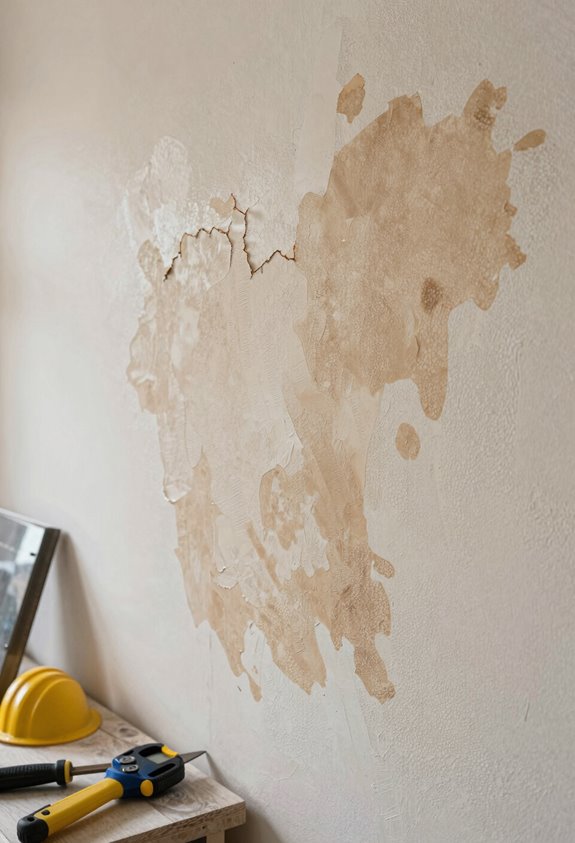
Ever walked into a room and noticed something just feels off? Maybe there’s a yellow or brown stain on the ceiling or wall that wasn’t there before. That could be water damage, and ignoring it could lead to bigger issues down the road.
When checking your drywall, keep an eye out for signs of trouble. Discoloration is a big red flag. If you spot any peeling paint or bubbling wallpaper, that’s telling you there might be moisture trapped underneath. Don’t overlook it; those little signs can save you a ton of hassle later.
Also, check for mold or mildew, especially around baseboards and plumbing access points. It’s not just an eyesore—it can signal ongoing moisture problems that need to be tackled ASAP. So, why does this matter? Because catching these issues early means you can prevent costly repairs down the line.
Regular inspections can help keep your home safe and healthy. Next time you’re walking through your home, take a moment to look closely at your walls and ceilings. Truth is, being proactive about these visual indicators can save you time, money, and a headache in the future. What signs have you noticed around your living spaces? Always consider using moisture-resistant drywall to prevent further damage when making repairs.
Recommended Products

Includes one pallet of 60 cases (720 tiles/2880 sq ft); Versatile; The no-fuss smooth texture and color allow for seamless integration into any room or design scheme; Perfect for office buildings, restaurants, and home improvement

TRANSFORM OLD OR DAMAGED CEILINGS FAST - Quickly upgrade popcorn, stucco, or plain drywall ceilings with these decorative PVC ceiling tiles designed for fast, hassle-free renovation. Ideal for DIY homeowners, renters, and property owners looking to refresh outdated spaces without expensive construction, these tiles create an elegant focal point in just hours, turning dull ceilings into visually striking surfaces with minimal effort and maximum impact, while meeting Class A fire-rated safety standards for added peace of mind.

Historic Gothic Design – This #150 Gothic Reims pattern features a majestic blend of embossed circles, ovals, and floral motifs. Inspired by classical European cathedrals, it adds a sophisticated and regal architectural element to any ceiling or wall.
Identifying Soft or Sagging Drywall
Have you ever walked into a room and noticed the drywall feels a bit too soft or droops in odd places? That’s often an early sign of water damage, and it’s something you shouldn’t ignore. You might feel a spongy texture, which indicates that the drywall has absorbed too much moisture and is losing its strength.
Look closely at seams or edges. If you spot any bulging or small bubbles, that’s a clear red flag that the drywall needs your attention fast. And if you see sagging near the ceiling, it’s usually a sign of long-term water exposure. Cracking at stress points is another indicator that the strength of that drywall is compromised, which can make it unsafe for hanging heavy items like shelves.
Try this: Before you hang anything on that wall, give it a thorough inspection. Remember, if the texture of the drywall seems off, it might not be suitable for installations. Keeping an eye on these things means you catch them early, sparing you from more expensive repairs down the road. Using a moisture-resistant drywall repair kit can help restore damaged areas more effectively and prevent further issues.
Recommended Products

HIGH QUALITY MATERIAL: Our drop ceiling grid system is constructed of high-grade galvanized steel, which features high strength, sturdiness and anti-deformation for reliable long-term use.

Built for 5/8" Moisture-Resistant Drywall – Perfectly sized for commercial-grade or high-moisture shower drywall applications using 5/8" board.

High-Performance Closed-Cell Spray Foam Insulation Advanced single-component closed-cell foam expands to create a seamless, airtight seal that helps reduce energy loss and seal gaps more effectively than traditional fiberglass batts and rolls
Detect Hidden Water Damage
Have you ever noticed a strange smell in your home, like something just isn’t right? That musty odor could be a telltale sign of mold hiding behind your walls. If you catch a whiff of that mustiness, it’s time to investigate further.
Another tip: feel around for soft or spongy spots on your drywall. If it feels a bit too squishy, that moisture could mean trouble—like leaks or excessive humidity. Sometimes, you can even spot hidden water damage by just keeping an eye on your utility bills. If they suddenly spike, it might not just be your imagination; concealed leaks could be lurking somewhere.
Make sure to check the areas around your windows and plumbing fixtures. They’re notorious spots for hidden leaks that can wreak havoc if not addressed. And don’t forget to look for dark spots or discolored patches on your walls. These can often send an early warning signal about potential water damage.
Using urethane injection can be an effective method for sealing small cracks that allow moisture infiltration, preventing further damage.
Recommended Products

CONCRETE & WOOD MOISTURE TESTING: Instant, non-destructive & quantitative moisture content testing of concrete & wood flooring, as well as relative humidity & dew point testing of concrete & ambient conditions


CONCRETE RH MEASUREMENT: Measure relative humidity, temperature & dew-point in concrete & cementitious floors; perform in-situ RH testing to comply with ASTM F2171
When to Consult Professionals for Water Damage?
When water damage creeps into your home, it can feel overwhelming. From peeling paint to odd smells, these signs demand your attention. So, how do you know when it’s time to call in the pros?
If water damage is showing up in various spots throughout your house, that’s a big signal to get a professional involved. They can really dig into the issue and figure out how bad it is. Got a hunch there’s moisture hiding where you can’t see it? Don’t take chances—calling an expert for moisture detection can save you from bigger problems down the line.
And let’s be real: if you notice mold, it’s not just an aesthetic issue. That’s an urgent call for help. Mold can lead to serious health risks, so reaching out to a professional quickly is crucial.
When the time comes to deal with insurance, having a professional assessment in your corner can really smooth things over. They provide the detailed reports that your insurer might need, making the whole process a lot easier for you.
Engaging certified technicians comes with perks, too. They have tools and know-how that can identify moisture issues you might miss, creating a restoration plan tailored just for your home.
For easy inspection and repair access, installing magnetic access panels can minimize disruption when professionals address hidden water damage.
Implement Preventive Measures Against Water Damage
Is your home ready to face the next rainstorm? Water damage can sneak up on you, leading to costly repairs and headaches. That’s why it’s so important to take preventive steps to safeguard your space.
First off, checking your plumbing fixtures and appliances can save you a lot of trouble. Grab a flashlight and look around for any leaks—especially if your appliances are older. It’s a simple task that can prevent bigger, more expensive issues down the road.
Another must-do is keeping your gutters and downspouts clean. They help direct water away from your foundation, which is your home’s first line of defense against flooding. If they’re clogged, that water can pool up and create stress on your walls.
Ever heard about moisture sensors? These little gadgets can be a lifesaver! They alert you to leaks early on and let you take action before things get out of hand. Plus, paying attention to ventilation in your kitchen and bathroom is key. Using exhaust fans can lower humidity levels and help keep that drywall damage at bay.
Regular HVAC maintenance is also essential. When systems aren’t kept in check, they can create condensation issues, leaving you with even more problems. So, making a routine out of checking your systems can go a long way.
In addition, choosing mold-resistant materials can prevent mold growth if water damage occurs, helping maintain your home’s health.
To wrap it all up, a few proactive measures can greatly reduce your chances of facing water damage. Are you ready to take control of your home’s health?
Recommended Products

PREVENT MOISTURE PROBLEMS: A mobile non-destructive impedance moisture detector designed to survey moisture content in flat roofing & waterproofing systems (as per ASTM D7954); ideal for water leak detection in roofing materials & integrity testing

The PowerSmoke PRO is an OEM-approved smoke machine specifically engineered to test the integrity of turbo, boosted, and high-pressure automobile systems in one quick procedure.

[Simple Operation] The PQ125E water leak detectors for home utilizes a factory-developed UI interaction system. Its touchscreen displays each functional module clearly with operational guidance and error pop-ups, enabling even inexperienced users to easily detect leak points. For professional leak detection personnel, it proves an invaluable asset.
Frequently Asked Questions
How to Tell if Drywall Has Water Damage?
To tell if drywall has water damage, we should look for water stains, monitor for mold growth, and check for drywall sagging. These signs indicate moisture issues that need our immediate attention to prevent further damage.
How Wet Can Drywall Get Before It’s Ruined?
Drywall can start showing serious issues with moisture levels above 20%. We’ll notice drywall expansion and potential mold growth, making repair options limited. If it’s saturated beyond a quarter, replacement might be our best choice.
How to Tell if Water Is Leaking Behind Drywall?
“A stitch in time saves nine.” We can spot leaks behind drywall by noticing mold growth, musty odors, or paint discoloration. If we see these signs, we should investigate urgently to prevent further damage.
How to Identify Where Water Damage Is Coming From?
To identify water damage, we’ll start with leak detection methods like moisture meters. Plumbing inspections can pinpoint problem areas. We should stay vigilant for stains or odors, signaling where moisture issues are originating.