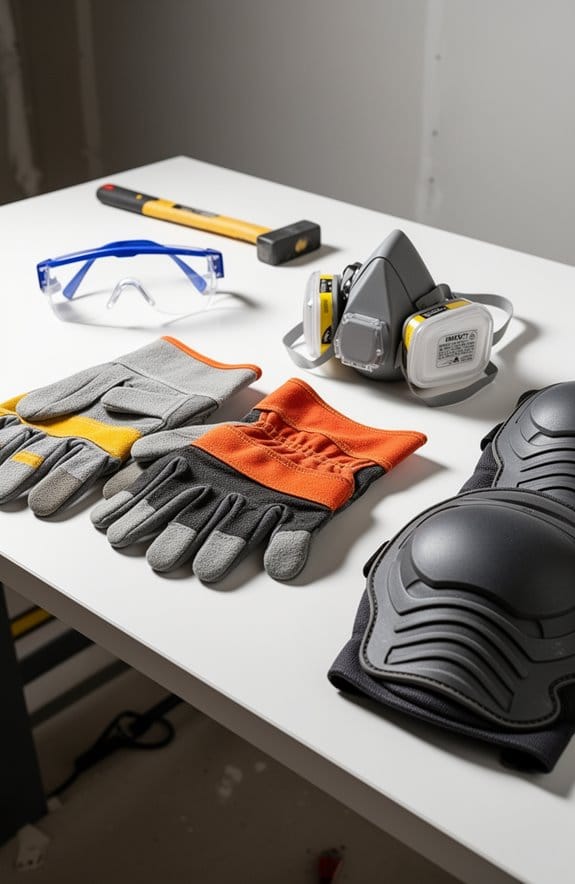

When you’re diving into drywall repair, you might think, “What could go wrong?” but trust me, you want to gear up for safety. First things first, you’ll want to dress the part. Durable workwear is a must—long-sleeved shirts and steel-toe boots can save you from cuts and give you that ankle support when you’re kneeling or climbing around.
Safety goggles that meet ANSI Z87.1 standards are essential. They protect your eyes from dust and debris that can fly around while you work.
Don’t forget about your lungs; a NIOSH-approved dust mask will keep you safe from inhaling harmful particles. And yes, a hard hat should be on your checklist, especially if the area isn’t a clean space—better safe than sorry, right?
Here’s the trick: always check and maintain your gear. It’s easy to overlook, but wearing worn-out or ineffective protective equipment can lead to accidents. Honestly, nobody wants to deal with that. So give your gear a quick once-over before you start.
To sum it up, safety gear is non-negotiable when repair work gets underway. It’s about protecting yourself so you can do a great job without the worry.
What’s your go-to safety gear when tackling home repairs?
Key Takeaways
- Wear durable workwear, including long-sleeved shirts and sturdy trousers, to prevent cuts and scrapes during drywall repair.
- Use steel-toe boots for foot protection against falling debris, offering traction and ankle support on uneven surfaces.
- Protect your eyes with safety goggles that meet ANSI Z87.1 standards and inspect them regularly for any damage.
- Employ dust masks or respirators approved by NIOSH or MSHA to filter harmful particles and improve air quality while working.
- Incorporate knee pads for extra comfort when kneeling on hard surfaces, enabling prolonged work without discomfort.
Essential Workwear for Drywall Repair

Have you ever found yourself in a drywall repair situation and realized you’re not dressed for the job? It happens to the best of us. The right workwear isn’t just about looking the part; it’s crucial for your safety and comfort while you work.
First, go for durable workwear. Long-sleeved shirts and sturdy trousers can really save you from those pesky cuts and scrapes. Don’t forget about your feet; steel-toe boots are a must. They not only protect against falling debris but also give you the stable footing you need on uneven surfaces.
When you’re sanding or applying joint compounds, you should definitely wear safety goggles. They’ll keep dust and splashes away from your eyes, which is so important. How many times have you wished you had those on while dealing with a cloud of dust? And honestly, don’t skip the dust mask or respirator. They’re key for keeping harmful particles out of your lungs and making your work environment safer. Choosing masks with at least 95% filtration efficiency is recommended to ensure effective protection.
Moving on to comfort: if you’ve ever spent a long time on your knees, you know it can be rough. Investing in a good pair of knee pads will make a huge difference. You’ll thank yourself for it later.
Why Do You Need Personal Protective Equipment (PPE)?

Tackling drywall repair can be tricky, but there’s one thing you absolutely need: personal protective equipment, or PPE. Have you ever thought about how dangerous dust and debris can be? Wearing the right gear not only keeps you safe but also makes the job a whole lot easier.
First off, safety goggles are a must. When you’re cutting or sanding drywall, little bits can fly everywhere. Those tiny particles can hurt your eyes, so don’t take any chances. When it comes to gloves, you want them for a couple of reasons: they protect your hands from sharp edges and harmful chemicals and give you a better grip on tools.
It’s also important to have a good dust mask. If you’re working in a space that isn’t well-ventilated, this is critical for your lungs. Breathing in that dust isn’t just annoying; it can lead to respiratory problems down the line. And let’s not forget about knee pads. If you’re going to be kneeling for long periods, your knees will thank you later.
In addition, understanding the importance of moisture-resistant materials can help in choosing the right drywall repair products for safer and more effective repairs.
So, do yourself a favor and invest in this combination of PPE. It’ll keep injuries at bay and help you work more effectively. You can then focus on getting that drywall done without the worry of getting hurt.
Let’s wrap this up: staying safe while working on drywall is key. What steps are you taking to protect yourself during your next project?
Key Protective Gear for Eye Safety

Eye safety is super important when you’re diving into a drywall repair project. Ever had a tiny piece of debris fly into your eye? It’s not fun. That’s why wearing safety goggles is a must. A good pair of goggles will protect you from all those flying bits and dust that can come up while you’re working.
When picking out goggles, make sure they meet ANSI Z87.1 safety standards. You want them to be tough enough to handle impacts and resist chemical burns from joint compounds. Comfort matters too; goggles should fit snugly around your eyes to keep dust out. So, do yourself a favor and check your goggles before starting any work. Look for scratches or cracks because damaged goggles won’t give you the protection you need.
Honesty, even small repairs can kick up a lot of dust. This is why goggles should always be on your list when getting ready to tackle home improvement tasks. Don’t underestimate how quickly dust clouds can form and cause problems.
Using effective dust collection can further reduce airborne particles and protect your eyes during drywall repair.
In short, prioritizing your eye safety is essential. So, what’s your next project? Are you ready to protect those precious eyes?
Why Do You Need a Good Dust Mask for Drywall Work?
Have you ever started a drywall project and immediately felt the dust filling the air? It’s more than just a nuisance; it can seriously affect your breathing. That’s why investing in a good dust mask is so important during drywall work. Whether you’re cutting, sanding, or repairing, a quality dust mask can make all the difference for your lungs.
When you inhale dust, you’re not just dealing with annoying particles; you’re exposing your lungs to harmful contaminants. We all know how messy drywall work can get, and the last thing you want is to end up with respiratory problems down the line. NIOSH- or MSHA-approved dust masks are designed to filter out these dangerous substances. In spaces that aren’t well-ventilated, wearing a mask becomes even more critical.
Here’s the trick: find a dust mask that fits well. A well-fitted mask not only feels comfortable but also ensures that you’re breathing cleaner air while you work. It’s like having a buffer against mold spores and other irritants that might already be lurking in the drywall you’re fixing.
Using dustless drywall sanders or tools with built-in vacuum systems can also significantly reduce airborne dust, making your work environment safer.
Honestly, prioritizing your health makes a huge difference. It allows you to focus on your project rather than worrying about what you’re inhaling. Remember, your respiratory health should be just as important as finishing that wall.
Choosing the Right Hard Hat for Safety
When you’re working on drywall repair, choosing the right hard hat is essential for keeping yourself safe on the job. Have you ever been in a situation where falling objects made you rethink your safety gear? It’s crucial that your hard hat meets ANSI Z89.1 safety standards, which are designed to protect against impacts and those pesky falling tools.
Now, let’s talk comfort. It’s really important that your hard hat doesn’t feel like a weight on your head for hours. Go for lightweight materials like carbon fiber. You’ll appreciate how much more comfortable you’ll be, especially when you’re in the thick of a long project. Plus, look for an adjustable suspension system—that way, you can get a snug fit that reduces fatigue and lets you focus on your work instead of fidgeting with your gear.
Ventilation is another big deal. If you’re working in warm conditions, a hard hat with good airflow can make all the difference. You don’t want to be sweating under there while trying to concentrate. Consider features like a removable sweatband, which can help keep you cool and comfortable throughout the day.
So, why does this matter? It’s about your overall protection and comfort on-site. Also, make sure your hard hat is compatible with other gear, like earmuffs or safety goggles—after all, safety is a team effort! Additionally, just as exterior spackle requires consideration for weather resistance, choosing safety gear that withstands environmental conditions ensures durable protection throughout your project.
How to Select the Best Work Boots
When it comes to drywall repair, having the right work boots can make all the difference. Ever wonder why? It boils down to safety and comfort. For starters, it’s wise to look for steel-toe protection. This feature can save your toes from heavy materials that could easily fall on the job site.
Another thing to consider is the soles of your boots. Slip-resistant soles are a must—trust me on this one. They give you the grip you need on those unstable surfaces or when you’re up on a ladder. Nobody wants to take a spill during a crucial repair, right?
Durability matters too. Choose boots made from tough materials that can stand up to all the wear and tear from drywall dust and rough conditions. And don’t forget about your ankles! You want to ensure they’re supported, especially when you’re bending or crouching frequently. This support helps you avoid injuries that could slow you down on the job.
If you know you’ll be working in damp areas, go for waterproof options. Keeping your feet dry is key to staying comfortable and focused while you’re in the thick of repairs. Plus, who likes the feeling of soggy socks?
Selecting gear with water resistance ensures comfort and longevity, especially in challenging environments.
How to Care for Your Safety Gear
Caring for your safety gear is absolutely key when you’re tackling drywall repairs. You wouldn’t want to find out your goggles are falling apart just when you need them the most, right? Regularly checking your gear for wear and tear can make all the difference. Look for things like frayed straps on your goggles or any cracks in your face masks.
Here’s the trick: always clean your safety goggles with a microfiber cloth and a bit of lens cleaner after each use. This keeps your eyes safe from dust and debris that can mess with your vision. Storing your protective gear properly is crucial too. Make sure to keep your workwear in a dry, well-ventilated spot.
Replacing damaged safety gear should be done right away. That goes for gloves and masks, which are often the first things to show signs of wear. Truth is, using damaged gear can be just as risky as not using any at all. And don’t forget to follow the manufacturer’s guidelines when washing your gear; it plays a big role in maintaining its effectiveness. For enhanced respiratory safety during drywall sanding, consider using dust masks or respirators to minimize inhalation risks.
Understanding the Risks of Inadequate Protective Gear
Ever had a project go sideways because you didn’t wear the right gear? Working on drywall repairs can be messy, and skipping protective equipment might seem tempting, but it can lead to serious safety issues.
First off, putting on safety glasses is a must. Dust and debris can get in your eyes and cause injuries you just don’t want to deal with. Plus, it’s not just about being uncomfortable; it can lead to long-term damage. And don’t forget about wearing gloves! They protect your hands from sharp edges and cuts, which can be more common than you’d think.
You might think, “It’s just dust,” but inhaling those fine particles is a real concern. Respiratory problems can crop up pretty quick if you’re not careful. So, make sure you’ve got some sort of mask or respirator while you work. And, let’s talk about knee pads for a second. Kneeling for long periods hurts, and those pads can save your knees from serious discomfort.
Also, don’t overlook head protection. Hard hats can prevent nasty injuries from falling objects, which can happen more often than we’d like to admit. You probably want to keep your head in one piece while tackling repairs, right?
Additionally, when preparing for wall repairs, it’s important to clean the area and remove loose materials to ensure a safe and effective working surface.
When you put safety at the forefront, you’re not just protecting yourself from injuries; you’re also creating a more efficient work environment. So, before you dive into your next project, think about gearing up properly. After all, isn’t it better to be safe than sorry?
Additional Accessories for Comprehensive Safety
When it comes to drywall repairs, do you ever think about how much protection you really need? Sure, basic safety gear is important, but adding a few extra accessories can make a big difference in how safe and comfortable you feel while you work.
Knee pads? A must-have for anyone planning to spend time kneeling on hard surfaces. They not only cushion your knees but also let you focus on the task instead of how sore you might get after a while. And if you’re working on ceilings, don’t forget a hard hat. You want to protect your noggin from any accidental bumps or falling debris, right?
Dust masks or respirators are also key players in your safety arsenal. With all the fine dust kicked up during repairs, protecting your lungs should be a top priority. Have you ever dealt with that annoying cough that lingers long after the dust settles? Not fun! Durable work gloves are another go-to. They keep your hands safe from sharp edges, and they help you grip your tools better.
And let’s not overlook ear protection. When you’ve got loud equipment like sanders or screw guns buzzing away, protecting your hearing is crucial. Nobody wants to deal with that ringing in your ears later on.
To keep your eyes shielded from irritants, consider wearing dust goggles with anti-fog features to maintain clear vision and comfort throughout your project.
The best part is that when you mix these accessories with standard safety gear, you’re setting yourself up for a much safer drywall repair project. It’s about being smart while you work. So next time you grab your tools, consider what extra gear you might need to keep yourself safe and sound. What’s one accessory you’ve missed before that could’ve made your project easier?
Frequently Asked Questions
What PPE Is Needed for Drywall?
When tackling drywall projects, we need safety goggles, dust masks, disposable gloves, knee pads, ear protection, work boots, coveralls, and respirator masks. These items guarantee our safety and comfort while working effectively.
What Supplies Do I Need for Drywall Repair?
For drywall repair, we need quality knives, a saw, measuring tools, and a mud pan. Utilizing the best drywall tools will help us avoid common drywall mistakes and enhance our finishing techniques during the installation process.
Do You Need to Wear a Mask When Sanding Drywall?
Absolutely, we need to wear a mask when sanding drywall. Ensuring respiratory safety isn’t just precautionary; it’s essential. Remember, choosing the right mask type boosts effectiveness and protects our health from dust exposure and indoor air quality issues.
What Tools Does a Dryliner Need?
As dryliners, we need essential tools like drywall saws, utility knives, measuring tools, and taping knives. Don’t forget proper safety gear, including safety goggles, when handling drywall screws and joint compound for a successful project.