Have you ever struggled with getting the perfect finish on your woodworking projects? Understanding the difference between hand sanding and power sanding might just be what you need to take your skills to the next level.
Hand sanding gives you total control, which is especially important when working on intricate shapes and curves. It’s all about precision. Start with coarser grits to shape your wood, and then gradually move to finer grits for that smooth finish you want. Remember, the feel of the wood under your hands can guide your process.
On the other hand, power sanding can make quick work of larger surfaces. It’s super efficient but requires a gentle touch to avoid damaging the material.
So, why does this matter? Well, if you rush through sanding with power tools without the right technique, you could end up with surfaces that need way more work to fix.
When deciding which method to use, consider the size of your project, what material you’re working with, and the finish you’re aiming for. Sometimes, it’s best to combine both techniques for optimal results.
The best part? You can mix and match these techniques depending on your project’s needs. Just remember to pay attention to the texture of the wood as you go.
In conclusion, mastering both hand sanding and power sanding can elevate your woodworking game. Are you ready to give these techniques a try on your next project?
Key Takeaways
- Hand sanding offers precise control and is ideal for intricate shapes, while power sanding is faster for larger surfaces.
- Power sanding can damage delicate areas, making hand sanding a safer option for detailed work.
- Starting with coarser grit and progressing to finer grit is essential for achieving a smooth finish with both methods.
- Consider the material type and project complexity when choosing between hand and power sanding techniques.
- Using quality power sanders and maintaining even pressure ensures polished results while minimizing swirl marks.
Overview of Sanding Methods: Hand vs. Power
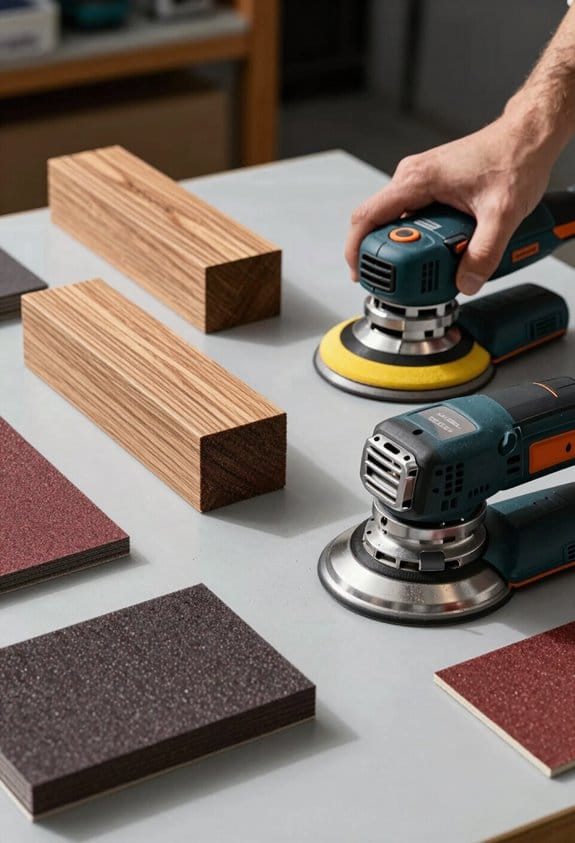
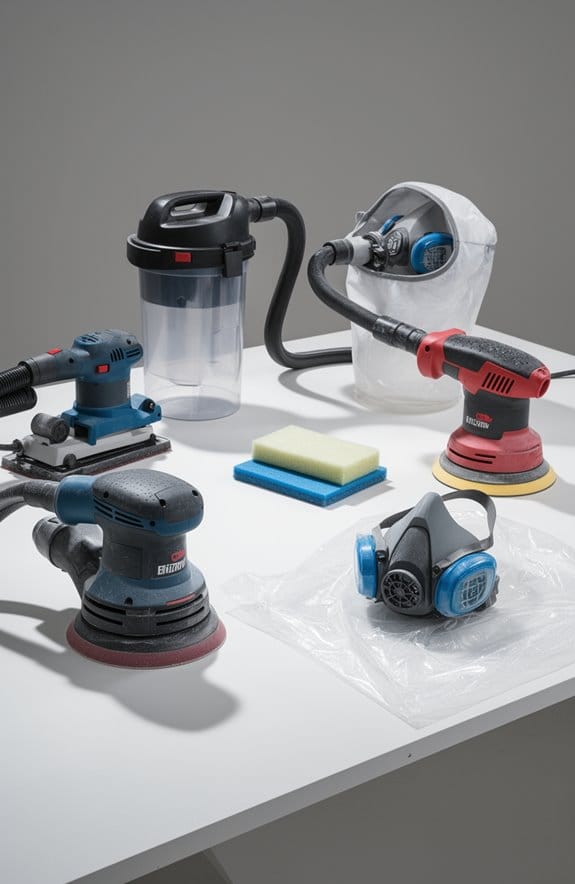
When you’re tackling a sanding project, you might wonder whether to go with hand sanding or power sanding. It’s a common dilemma, and both methods have their perks. Hand sanding gives you total control, which is super handy for complex shapes and those tricky curves. You’ll be using sandpaper and blocks, slowly moving through different grit levels to end up with a nice, smooth finish.
But if you’re working on a bigger space, power sanding can really speed things up. Tools like orbital and belt sanders are designed for quick material removal, perfect for larger surfaces. Just a word of caution: these sanders can easily oversand delicate areas, so keep an eye on what you’re working with.
Safety matters too. Power sanding creates quite a bit of noise and dust, so it’s a smart move to wear hearing protection and a dust mask while you’re at it. For improved cleanup and health protection, consider using sanding tools equipped with dust collection systems.
Benefits of Hand Sanding: Precision and Control
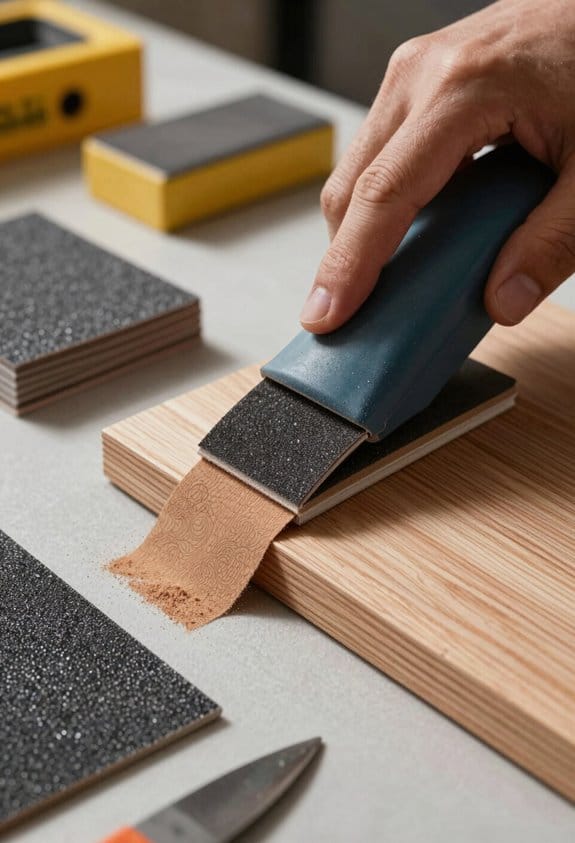
Ever tried to get a smooth finish on a delicate wooden project but ended up with scratches and uneven spots? Hand sanding might just be the answer you’re looking for. It gives you the kind of precision and control that power sanders just can’t match. When you’re tackling those intricate surfaces, hand sanding lets you get up close and personal with the wood, enhancing the grain while keeping things neat.
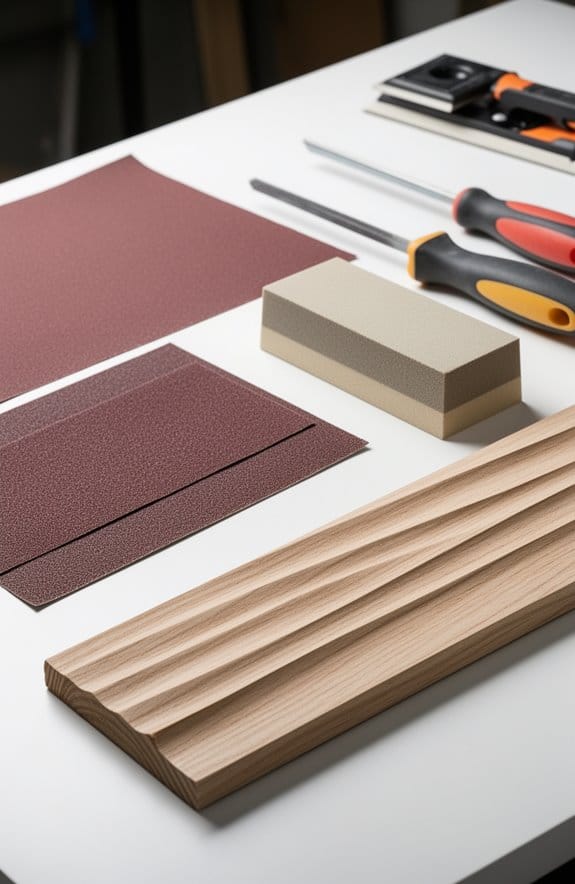
Here’s the trick: using sanding blocks or sheets of different grits, you can really feel how much pressure to apply. It’s like getting a feedback loop right from the wood! You might not think it at first, but when you’re dealing with curves and contours, hand sanding is your friend. Those power sanders often miss the mark on irregular surfaces, leaving you with less-than-perfect results. But with hand sanding, you can easily follow the shape of the piece, making sure every nook and cranny gets the attention it deserves.
Sure, hand sanding can be a bit of a time-suck, especially on larger projects, but the control you gain is worth it. It helps prevent over-sanding and potential damage to your piece, which can be super frustrating. Plus, nothing beats the satisfaction of achieving a beautifully polished finish with your own hands. Using sanding blocks designed with ergonomic designs can also reduce hand fatigue during these longer sessions.
Power Sanding: Pros and Cons Explained
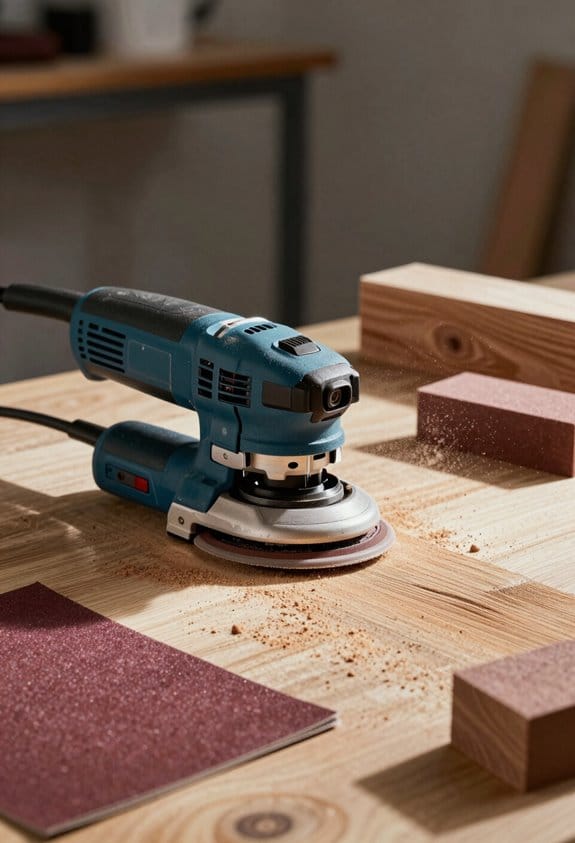
Power sanding can really come in handy, especially when you’re tackling big woodworking projects. It speeds up the material removal process, which is a relief when you’re staring down a massive surface. Think about those times when you just want to get things done faster—power sanders like orbital and belt sanders can deliver a smooth finish way quicker than hand sanding ever could.
But let’s get real: there are a few things to keep in mind. Power sanding can be a bit too harsh for delicate projects, and there’s always the risk of causing damage if you’re not careful. Plus, don’t forget about safety. Dust masks and hearing protection are a must because nobody likes choking on dust or losing their hearing.
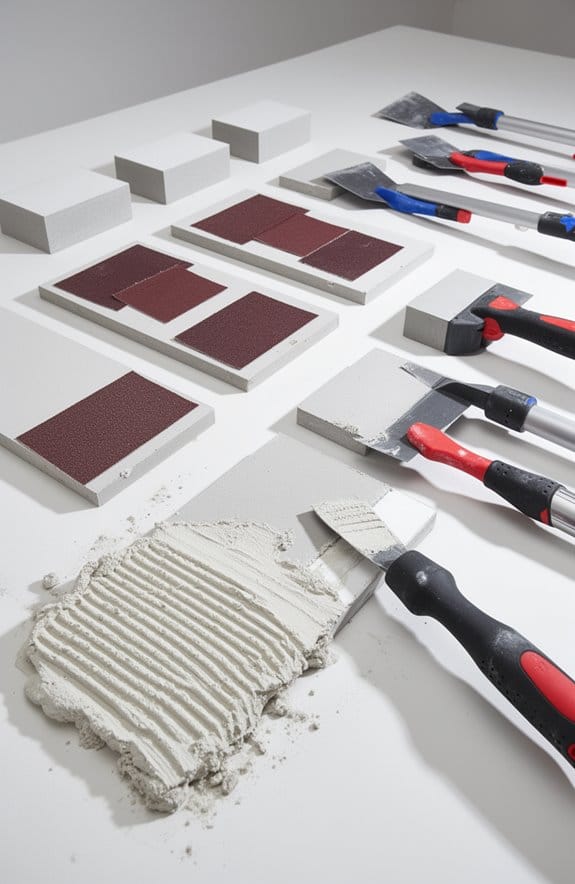
Here’s a tip: Invest in a quality power sander. Sure, they can be pricey upfront, but if you’ve got a lot of sanding to do, their efficiency can really pay off over time. Many electric drywall sanders even include built-in dust collection systems to keep your workspace cleaner and reduce airborne particles.
So, why does this matter? It’s all about finding the right tool for your specific project. If you’re mostly working on smaller, finer details, you might want to stick to good old-fashioned hand sanding. But for those larger, grand designs, power sanding can be a solid choice.
In short, power sanding is a great way to speed things up, but be mindful of what you’re working on. Are you ready to tackle your next project and decide which method fits best for you?
Recommended Products
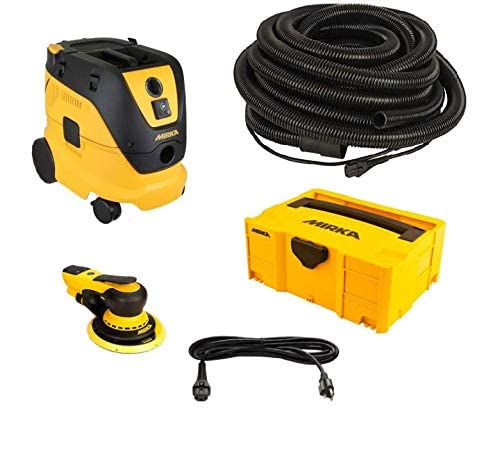
Variable speed control with lever, for an optimal control when working Separate on/off switch, for easy and safe handling

LIGHTWEIGHT BUILD FOR LONG HOURS Weighing just 7.1 lb, the Mirka electric drywall sander reduces fatigue during extended sanding on ceilings and walls—ideal for popcorn ceiling removal, painting prep, or full-room renovation work.

How many times have you thought a dedicated disc sander would help your production
How to Choose the Right Sanding Method for Your Project?
Got a sanding project coming up? Choosing the right method can really make a difference in how your finished piece looks. Here’s how to figure it out.
First off, think about the size and complexity of your project. If you’re tackling something big, power tools can definitely speed things up. But if you’re working on something small or intricate, there’s nothing quite like hand sanding for that extra precision. So, what are you working on?
Next, the material matters too. If you’re dealing with hardwood, power sanding usually does the trick. But if you’re working with softer materials, like pine, stick to hand sanding so you don’t accidentally damage it. The last thing you want is a ruined piece because of a heavy hand.
Also, consider the finish you’re after. For a smooth, polished look, you might want to combine both methods. Power tools can help strip away the rough stuff quickly, while hand sanding can perfect those details without the risk of overdoing it.
And let’s not forget about your budget and experience level. Hand sanding is generally easier on the wallet and is a great option for those just starting out. You might find it’s less overwhelming and more manageable if you’re new to all this.
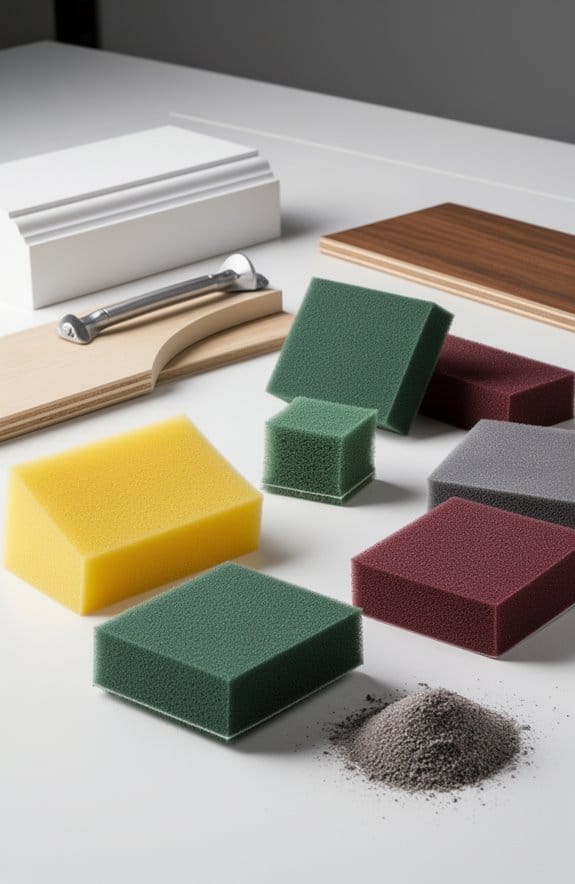
Using sanding sponges with the appropriate grit type can further enhance the quality of your hand sanding work.
Recommended Products

Sanding Kit includes: 1 EKASAND E-Series 3"x4" Central Vacuum Orbital Sander, Hook & Loop 4-hole pad. Our EKASAND 3x4 orbital sanders are ergonomically designed to provide you with more balance, comfort and control. It offers 3 adjustable speeds; 4,000, 7,000 & 9,000, features a brushless 350W motor with a 2 year warranty.

Bulk Box of 100 Sponges
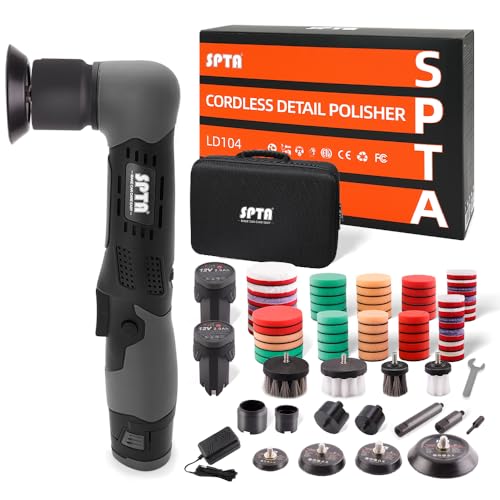
SPTA's newly designed Mini Cordless Polisher is the most important tool in your polishing arsenal. Polish every inch of your vehicle to perfection with this lightweight paint perfection tool. Stable speed, low noise, long life and superior polishing efficiency equipped.
Key Techniques for Effective Sanding Results
Sanding can feel overwhelming, especially if you’re aiming for that flawless finish. So you might be wondering how to get there without pulling your hair out. Don’t worry! With a few key techniques, you can tackle your project confidently.
When it comes to hand sanding, here’s a solid approach: start off with a coarser grit—like 80-grit—to really shape the surface. Then, as you’re getting closer to that high-quality finish, switch to a finer grit, such as 220-grit. This combo is super effective and gives you control, which is especially helpful for those detailed spots. Have you ever struggled with neck-ache from trying to sand into tight corners? A little patience here pays off!
Now, if you’re using a power sander, I’d recommend reaching for a random orbital sander for larger spaces. This tool rotates and oscillates, minimizing those pesky swirl marks, and keeping everything looking uniform. It’s a real time saver and reduces the risk of sanding too deep in one spot. The best part? You don’t have to be a pro to get it right!
Regardless of whether you go the hand or power route, maintaining even pressure is key. Too much pressure can lead to uneven sanding, and we want your project to look polished and professional. So, keep a steady hand and let the tool do the work!
Think about it this way: with effective sanding, you’re setting the stage for the rest of your project. Take your time and enjoy the process. Your finished piece will reflect the effort you’ve put into it! For a cleaner and healthier workspace, consider using a drywall sander with an integrated vacuum dust collection system, which can remove up to 99% of sanding dust.
Frequently Asked Questions
Is a Power Sander Better Than Hand Sanding?
We believe the answer depends on our project type. Power sanders boost efficiency and reduce sanding time, but hand sanding offers user control and precision. Let’s consider wood grain and costs before deciding what’s best for us.
What Is the 100 Grit Rule?
When we sand, we blend hand tools and power tools, following the 100 grit rule for grit progression. This guarantees effective surface preparation, guiding us through grit levels for stunning wood finishing and those essential finishing touches.
What Is the Golden Rule of Sanding?
The golden rule of sanding? We always start with coarse grit, ensuring proper techniques like surface preparation and dust management. By considering material and project types, we achieve a smooth finish while maintaining sanding safety.
What Are the 5 Most Common Mistakes People Make With a Random Orbital Sander?
Aren’t we all prone to a few common sander errors? Let’s avoid poor pad selection, improper pressure, neglecting dust collection, forgetting maintenance, and choosing the wrong sandpaper grades for perfect wood finishing without swirl marks.