As an Amazon Associate, we earn from qualifying purchases. Some links may be affiliate links at no extra cost to you. Although our opinions are based on curated research, we haven't used these products. Articles generated with AI.

3 Best Ceiling Drywall Screws for a Flawless Installation Every Time

To achieve a flawless ceiling drywall installation, consider these three screw options. First, Velocity Drywall Screws #6, measuring 1-5/8 inches, come in a pack of 100. Second, the 170pcs #6 Drywall Screws feature a Black Phillips Head and are 1-1/2 inches long. Finally, the Wensilon #6 Stainless Steel Drywall Screws Kit provides 125 pieces in various sizes. Make certain you choose screws with coarse threads for wood and use a drill with a suitable drive for easy installation. More details await you ahead.
Key Takeaways
- Velocity Drywall Screws #6 (1 5/8 inches) offer sharp tips and coarse threads for efficient fastening to wood studs, enhancing ease of installation.
- 170pcs #6 Screws with Black Phillips Head are designed specifically for ceiling installations, providing a reliable option with rust-resistant black oxide coating.
- Wensilon 410 Stainless Steel Fastener Kit includes various sizes, ensuring adaptability for different installation needs, especially in humid environments.
- Coarse-thread screws are ideal for wooden studs, minimizing wood splitting risks, while fine-thread screws excel with metal studs for better penetration.
- Bugle head design ensures seamless countersinking, preventing drywall surface damage and achieving a flush finish during installation.
| Velocity Drywall Screws #6 (100 Pieces) | 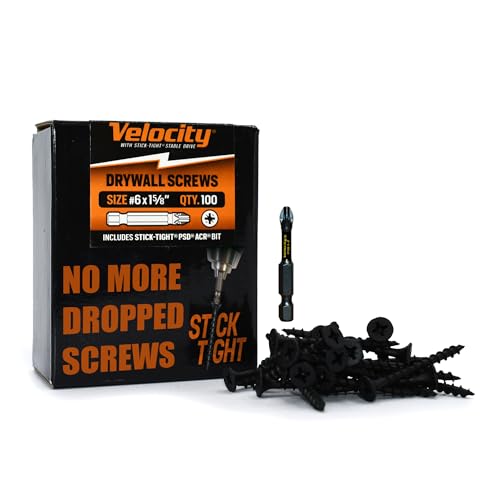 | Best for Professionals | Material: High-quality steel with black phosphate coating | Quantity: 100 pieces | Head Design: Bugle head | VIEW LATEST PRICE | Read Our Analysis |
| 170pcs #6 Drywall Screws Black Phillips Head |  | Best Value | Material: High-quality carbon steel with black oxide treatment | Quantity: 170 pieces | Head Design: Tapered bugle head | VIEW LATEST PRICE | Read Our Analysis |
| 6 Stainless Steel Drywall Screws Kit – Phillips |  | Most Versatile | Material: Stainless steel | Quantity: 125 pieces | Head Design: Truss head | VIEW LATEST PRICE | Read Our Analysis |
More Details on Our Top Picks
Velocity Drywall Screws #6 (100 Pieces)
If you’re tackling a drywall project, the Velocity Drywall Screws #6 (1 5/8 inches) are an excellent choice. These screws come in a pack of 100 and feature a sharp point tip for easy starting. Made from high-quality steel, they provide superior strength for your applications. Their coarse thread allows for fast installation, while the bugle head design guarantees a neat finish. The screws also have a black phosphate coating, making them rust-resistant for indoor use. Using the patented PSD ACR drive bit promotes stable one-handed installation, reducing wobbling. This makes them ideal for securing drywall and other lightweight materials.
- Material:High-quality steel with black phosphate coating
- Quantity:100 pieces
- Head Design:Bugle head
- Thread Type:Coarse screw thread
- Tip Design:Sharp point tip
- Applications:Drywall, heavy-duty applications
- Additional Feature:Stick-Tight Technology
- Additional Feature:Rust-resistant black phosphate
- Additional Feature:Includes PSD ACR drive bit
170pcs #6 Drywall Screws Black Phillips Head
For DIY enthusiasts and professionals alike, the 170pcs #6 Drywall Screws with a Black Phillips Head feature a size and design that make them a top choice for ceiling installations. These screws are 1-1/2 inches long and have coarse threads, ensuring a solid grip on wood studs. Made from high-quality carbon steel, they’re durable and resistant to rust due to their black oxide coating. The sharp tip enhances penetration, while the tapered bugle head countersinks easily. For best results, use a Phillips head screwdriver to drive them into drywall or wood, securing them firmly as you work.
- Material:High-quality carbon steel with black oxide treatment
- Quantity:170 pieces
- Head Design:Tapered bugle head
- Thread Type:Coarse thread
- Tip Design:Sharp tip
- Applications:Drywall, sheetrock, and wood
- Additional Feature:Clear sorting storage box
- Additional Feature:Enhanced corrosion resistance
- Additional Feature:Suitable for wood applications
6 Stainless Steel Drywall Screws Kit – Phillips
The #6 410 Stainless Steel Fastener Drywall Screws Kit by Wensilon is an excellent choice for both DIY enthusiasts and professionals who need reliable fasteners for various projects. This kit includes 125 pieces in sizes ranging from #6*1/2 to #6*2. You get 30 screws at #6*3/4, making them versatile for various applications like drywall and wood. Their fully threaded design offers a strong grip, while the sharp tail allows for easy drilling without pre-drilling. With a corrosion-resistant finish, these screws are durable and ideal for both indoor and outdoor projects. Trust this kit for your next installation.
- Material:Stainless steel
- Quantity:125 pieces
- Head Design:Truss head
- Thread Type:Fully threaded
- Tip Design:Sharp tail
- Applications:Drywall, slate, wood, and similar materials
- Additional Feature:Multiple size variety included
- Additional Feature:Smooth surface without burrs
- Additional Feature:Fully threaded design
Factors to Consider When Choosing Ceiling Drywall Screws
When choosing ceiling drywall screws, consider several important factors. You’ll want to look at material durability and strength, along with the thread type and design that best suits your project. Additionally, pay attention to screw length and size, head style, and surface finish to guarantee peak performance and appearance.
Material Durability and Strength
Choosing the right material for your ceiling drywall screws is essential for ensuring a strong and durable installation. Carbon steel screws are commonly used due to their hardness and durability, supporting drywall firmly to wooden or metal studs. For wet environments, consider stainless steel screws, as they resist rust and corrosion, enhancing the longevity of your installation. Additionally, coatings like black phosphate or black oxide can improve resistance to corrosion and wear, further extending service life. Remember, the thickness of the screw matters too; opt for screws that are at least 1.25 inches long and at least #8 gauge to support the weight of the drywall effectively, ensuring they withstand stresses during installation and occupancy.
Thread Type and Design
Understanding thread type and design is essential for selecting the right ceiling drywall screws. Coarse-thread screws offer better grip in drywall and wood applications, making them ideal for attaching drywall to wooden studs. Their design reduces the risk of splitting the wood while ensuring a secure fit. On the other hand, fine-thread screws are suited for metal studs, providing improved penetration and holding strength in thinner materials, though they’re less effective in wood. Additionally, look for screws with tapered bugle heads to allow for seamless countersinking, which prevents damage to the drywall surface during installation. A sharp tip design enhances ease of installation, allowing screws to start effectively and reducing pre-drilling needs for a smoother project experience.
Screw Length and Size
Selecting the right screw length and size is essential for a successful drywall installation. Typically, drywall screws range from 1 inch to 2 inches in length. For standard applications, a #6 screw works best, offering a good balance of strength and ease. If you’re working with thicker materials or wider framing, opt for longer screws, but for thinner drywall, shorter screws might suffice. Always consider the weight of the material you’re attaching. Using screws that are too short can lead to weak support, while overly long screws may damage the drywall or framing. Aim for precise screw placement, ensuring each screw is securely anchored without penetrating too deep, which can compromise integrity. Select wisely for a durable, efficient installation.
Head Style Selection
The head style of ceiling drywall screws considerably impacts the installation process and the final appearance of your project. Bugle head screws are your best option for drywall ceilings. They countersink smoothly, creating a flush finish that reduces the risk of damage during installation. If you need a flush fit for specific applications, consider flat head screws; they’re less common but useful for attaching drywall to wood or metal studs. Alternatively, truss head screws provide a wider bearing surface, which enhances grip and minimizes pull-through failure, ensuring secure fastening. Choosing the appropriate head style is essential for achieving both aesthetic appeal and structural performance, so think carefully about your project needs before making a selection.
Surface Finish Options
Choosing the right surface finish for ceiling drywall screws can greatly influence the performance and longevity of your project. You’ll find options like black phosphate and black oxide, which enhance corrosion resistance and durability. These finishes suit indoor and outdoor use, protecting screws in high humidity or moisture areas. If you’re working in a coastal environment, consider stainless steel for superior resistance. A smooth finish helps reduce friction during installation, making it easier to drive screws without damaging the drywall. Finally, remember the aesthetic appeal; specific finishes deliver a sleek look once installed. Take your time evaluating these options to guarantee you select the right screws, fitting both technical needs and visual preferences for your ceiling project.
Ease of Installation
Installation efficiency is crucial when working with ceiling drywall screws. Look for screws with a sharp point tip and coarse thread, as these features help the screw penetrate easily, speeding up the installation process. Patented drive technologies, like Stick-Tight Technology, guarantee the screw stays attached to the driver bit, allowing for a stable one-handed application while reducing wobbling. Additionally, choose screws with a bugle head design, as they counter-sink into the drywall without causing damage. Consider the sizes and quantities in packages; having a variety allows you to adapt to different ceiling materials and thicknesses. Opt for screws made from high-quality materials such as stainless steel or carbon steel, which promote durability and streamline your installation experience.
Corrosion Resistance Properties
Corrosion resistance properties are essential for ensuring that ceiling drywall screws remain reliable over time, especially in areas with high humidity. To choose the right screws, look for those treated with black oxide or black phosphate coatings. These coatings enhance corrosion resistance and are suitable for indoor projects. Alternatively, stainless steel screws provide superior protection due to their alloy composition, making them ideal for moisture-exposed environments. Remember, the effectiveness of corrosion resistance varies by material and surface treatment, so selecting high-quality steel can improve durability. Regularly inspect your screws for rust or signs of degradation. Catching these issues early can help you avoid larger problems later on, preserving the structural integrity of your ceilings.
Frequently Asked Questions
How Do I Determine Screw Length for Different Ceiling Materials?
To determine screw length for different ceiling materials, measure the thickness of the ceiling material. For standard drywall, use 1 1/4-inch screws for 1/2-inch drywall and 1 5/8-inch screws for 5/8-inch drywall. If you’re attaching to a wooden frame, use screws that penetrate at least 3/4-inch into the frame. For additional materials, adjust the screw length accordingly to guarantee a secure fit. Always double-check each measurement before installation.
Can Ceiling Drywall Screws Be Used for Wall Installations?
Yes, you can use ceiling drywall screws for wall installations. These screws, typically 1 1/4 to 1 5/8 inches long, work well for attaching drywall to wooden or metal studs. Make certain to use a power drill with a Phillips-head bit for proper installation. Set screws about 12 inches apart along the edges and every 16 inches in the field. This guarantees strong support and a smooth surface for finishing.
What’s the Difference Between Coated and Uncoated Drywall Screws?
Coated drywall screws have a protective layer, helping prevent rust and improving grip. They’re ideal for moist areas like bathrooms. Uncoated screws lack this layer, potentially leading to corrosion and reduced durability over time. Coated screws typically come in various lengths, such as 1 1/4 inches for drywall. Use a power drill with a #2 Phillips bit for installation. Choose between coated and uncoated screws based on your project’s environment and requirements.
Are There Specific Tools Needed for Installing Ceiling Drywall Screws?
Yes, you’ll need specific tools for installing ceiling drywall screws. First, grab a drill with a #2 Phillips bit. A T-square helps guarantee straight cuts, while a stud finder helps locate framing members. You’ll also need a tape measure for precise panel dimensions, usually 4×8 feet. A drywall knife is helpful for trimming edges. Finally, consider using a drywall lift for easy handling, especially if you’re working alone on high ceilings.
How Do I Remove Drywall Screws Without Damaging the Ceiling?
To remove drywall screws without damaging the ceiling, use a power drill with a screwdriver bit that matches the screw head. Set the drill to reverse and apply pressure gradually. If the screw is stuck, use pliers for extra grip. For added care, consider applying painter’s tape around the screw to protect the surrounding area. After removal, patch any holes with joint compound and sand smooth once dried for a clean finish.